

Sligo, Ireland
Located in the Border Region with Northern Ireland, UK Sligo is the largest town in the county, with a population of 22,560. The population of the county was 65,535 in 2016.
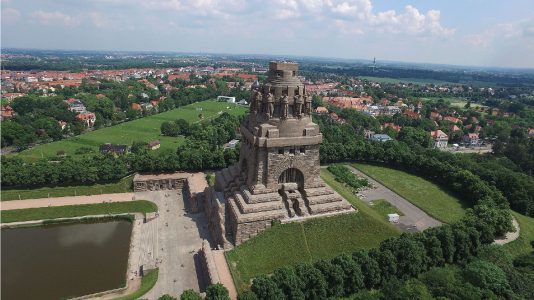
Leipzig, Germany
The most populous city in Saxony and 8th in Germany, it has 624,689 inhabitants. Leipzig is a growing city: 51,834 people moved here in 2022.
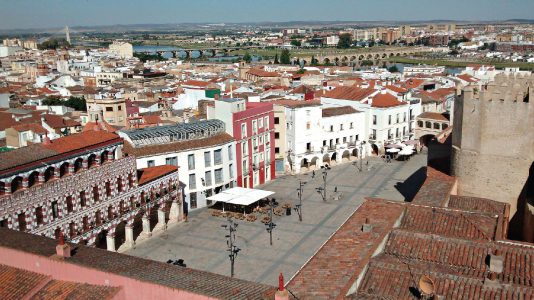
Badajoz, Spain
Badajoz is a NUTS3 region, located in the south-west of Spain. Its population is 672.137 inhabitants, population decline is a protracted trend and has a low population density (29 inhabitants/km2).

Bergen, Norway
West coast of Norway, fjorded mountainous landscape. V estland has a population of 638,821 (2021) of which 285,900 live in the capital, Bergen, Norway’s second largest city.
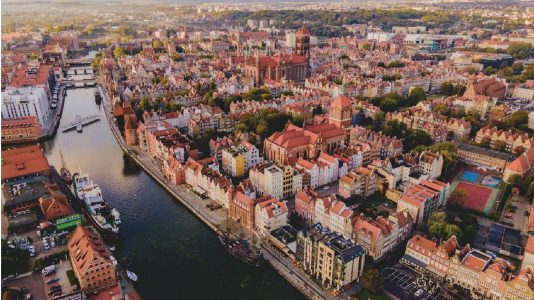
Gdansk, Poland
Inhabited by 486,000 people, it is one of the largest cities in northern Poland and the Baltic Sea Region. As a result of the Ukrainian-Russian war, the number of inhabitants increased to 618,000.

Zakynthos, Greece
Zakynthos is the third largest of the Ionian islands and it covers an area of 405.55 km2. The resident population amounts to 40,759 though this number rises considerably during summer.
Climate adaptation’s real barrier isn’t technology, it’s coordination. New PRO-CLIMATE policy papers explain why.
PRO-CLIMATE has submitted D6.1, the project’s first draft policy papers – six regional analyses and one European-level synthesis built directly on what stakeholders told us in this year’s Living Lab workshops. Between September and December 2025, PRO-CLIMATE’s six Living Labs. Sligo (Ireland), Leipzig (Germany), Badajoz Province (Spain), Bergen (Norway), Gdańsk (Poland) and Zakynthos (Greece) brought together public administrations, researchers, civil society groups and local stakeholders for a series of participatory workshops. The goal: identify, in

Sligo Living Lab Brings Together Local Leaders and Communities to Accelerate Climate Action Under Horizon Europe’s PRO-CLIMATE Project
The Atlantic Technological University (ATU) successfully hosted the “Sligo Living Lab: Co-creating Climate Adaptation Pathways for Sligo” workshop, as part of the Horizon Europe-funded PRO-CLIMATE research project. Held at the Sligo Park Hotel, the event brought together public authorities, utilities, researchers, community organisations, and businesses to explore regional climate adaptation challenges and governance solutions. Guided by facilitators Dr. Catalin Anton and Dr. Xu Liu, and under the coordination of Dr. Salem Gharbia, Head of
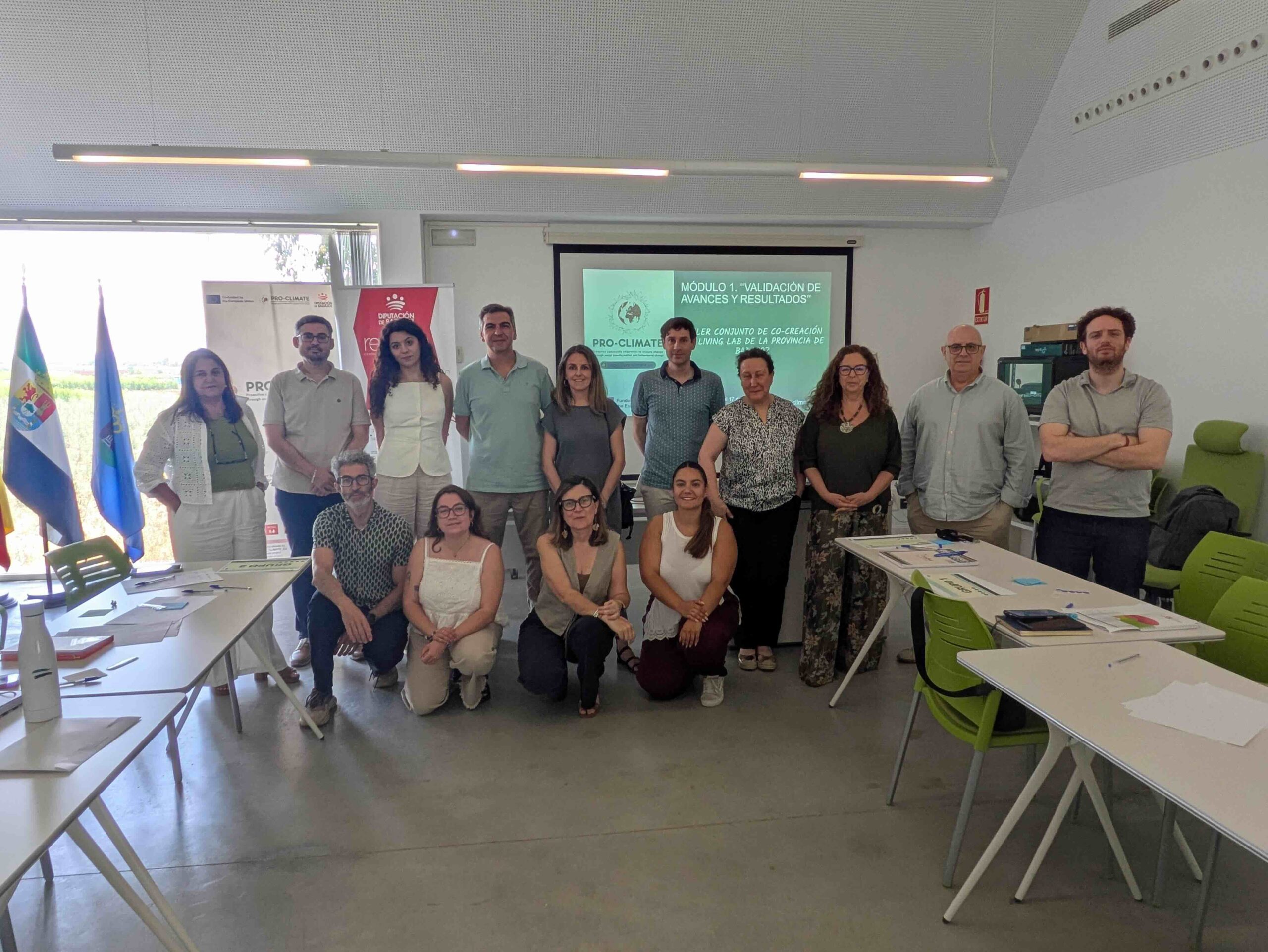
The Provincial Council holds a joint co-creation workshop in Calamonte to promote climate adaptation and face the demographic challenge in the province of Badajoz
The meeting has made it possible to validate the progress of the Living Lab of the Province of Badajoz, advance in the prioritization of measures, identification of barriers, formulation of policy recommendations and the promotion of behavioral changes. The Provincial Council of Badajoz, through the Area of Rural Development, Demographic Challenge and Tourism, together with the CARTIF technology centre, held a joint co-creation workshop on 17 June 2026 in Calamonte (Badajoz) within the framework
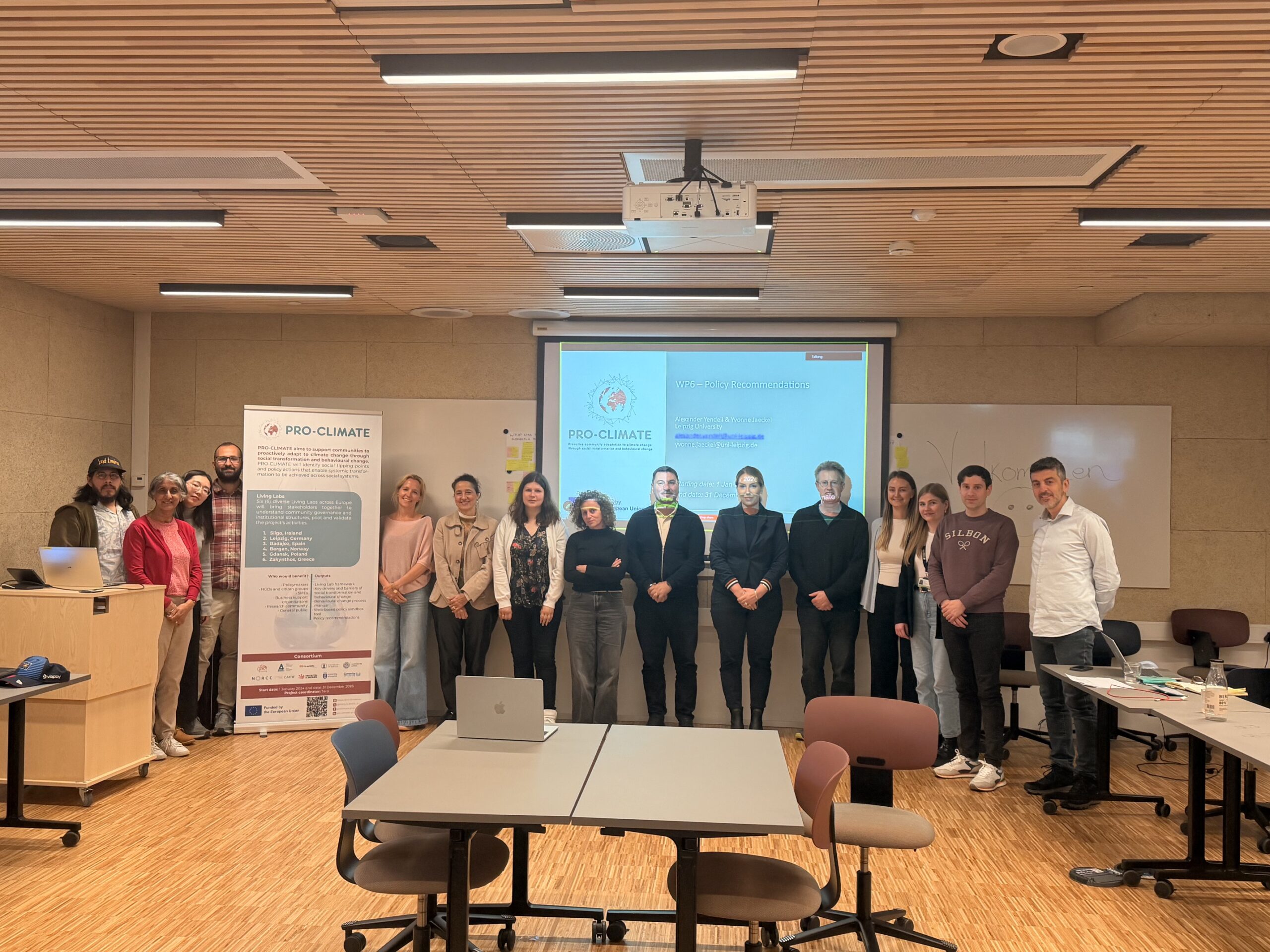
PRO-CLIMATE Partners Convene for 6th General Assembly in Bergen
The PRO-CLIMATE consortium gathered in Bergen, Norway, on 10-11 June 2026 for its 6th General Assembly, hosted by the University of Bergen – two intensive days of progress reviews, living lab showcases, and shared planning for the months ahead. Reviewing Progress Across Work Packages The first day opened with a project update from the coordinating team at Tero, followed by in-depth sessions covering the project’s core work packages. ATU presented advances in the Living
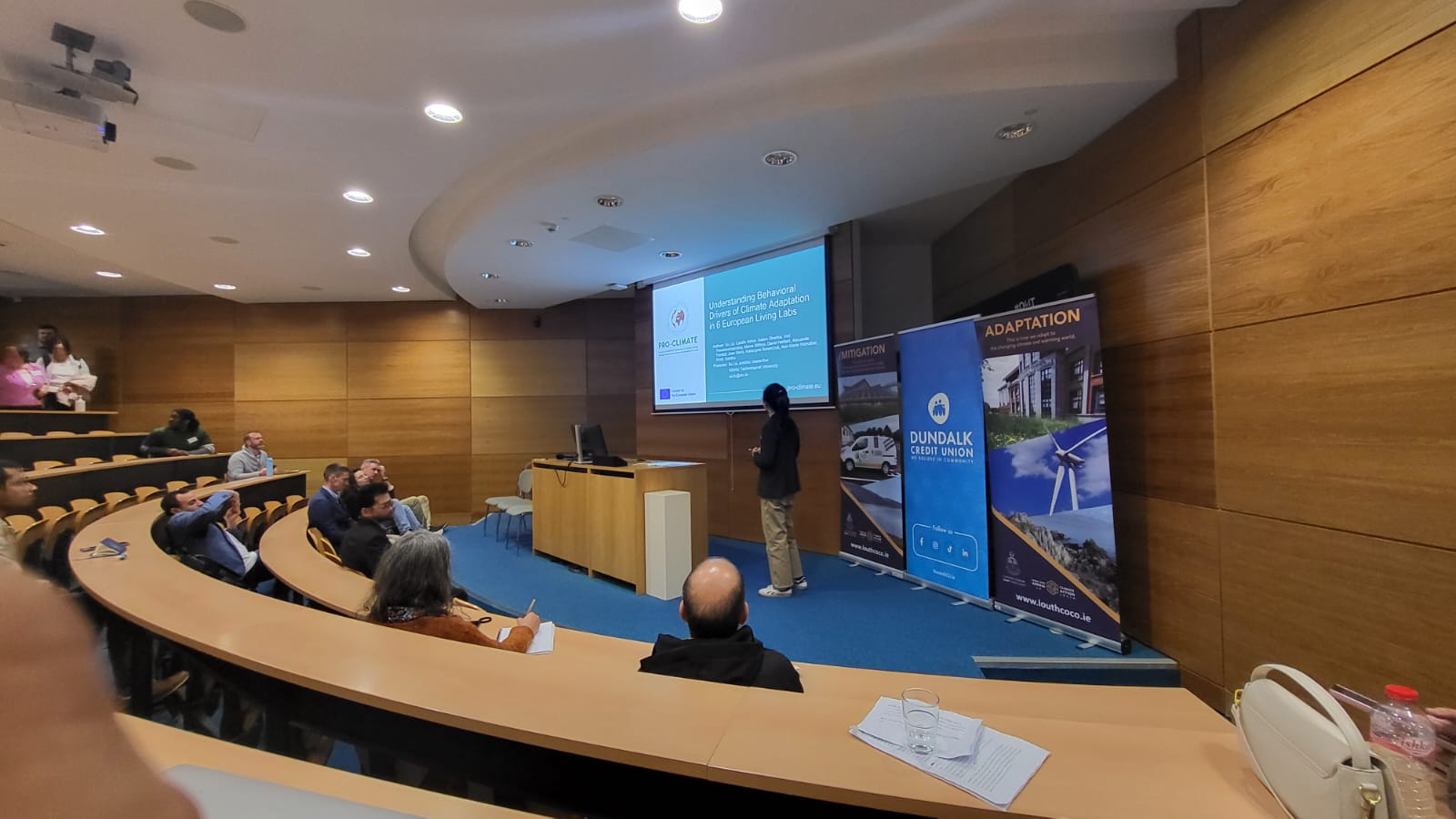
PRO-CLIMATE at the Environ 2026
PRO-CLIMATE Research Presented at Environ 2026: New Insights into Behavioural Drivers of Climate Adaptation Researchers from the PRO-CLIMATE project presented findings at Environ 2026, shedding light on how living labs can accelerate behavioural change in climate adaptation across European communities. The study, presented by colleagues from Atlantic Technological University (ATU), examined six living lab sites spanning Sligo, Gdańsk, Badajoz, Zakynthos, Leipzig, and Bergen. Using a mixed-methods approach (combining baseline surveys with participatory workshops) the
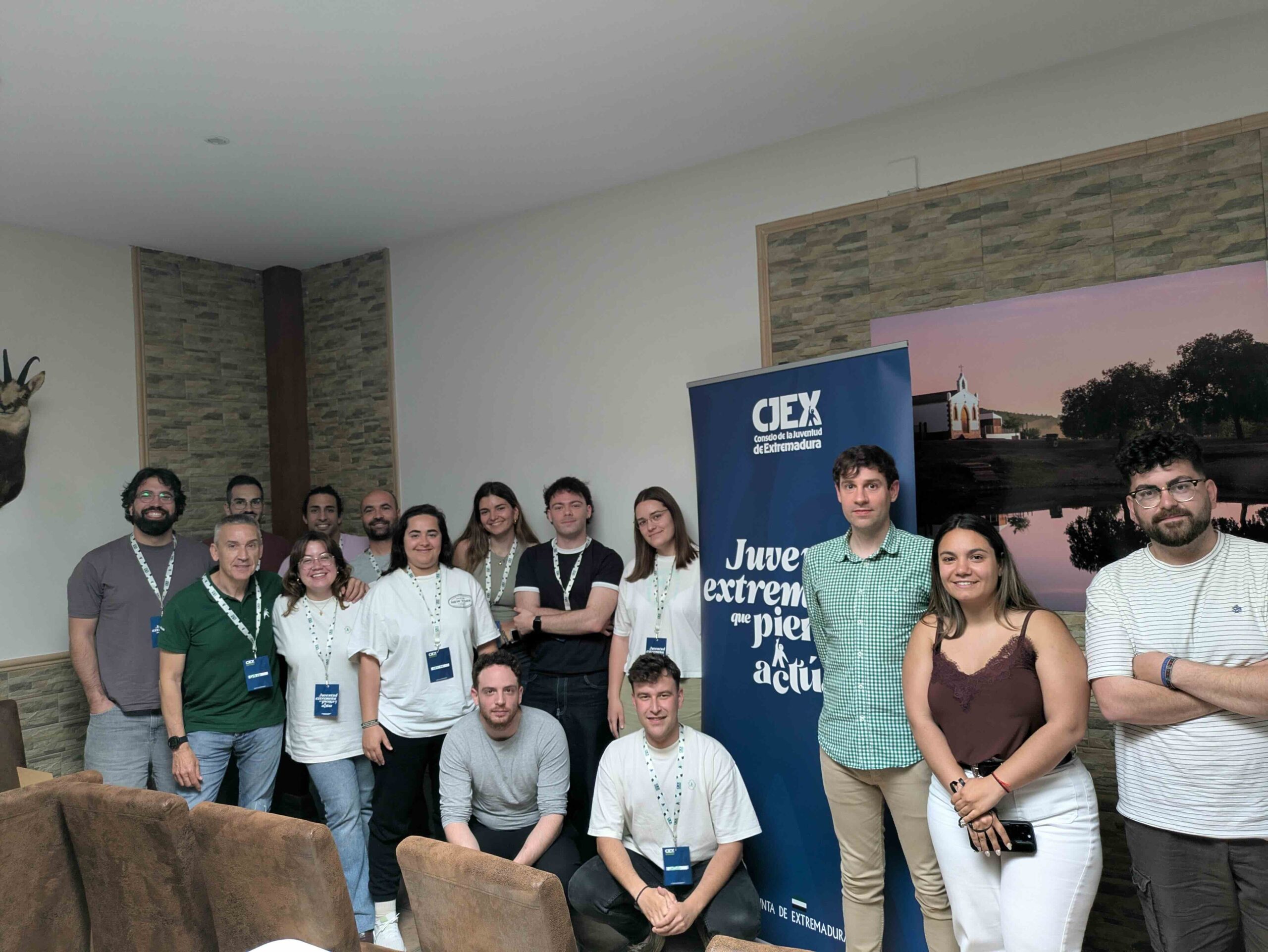
Young Voices for Climate Action: Extremadura Youth Shape the Future of Climate Adaptation
On April 17, 2026, young people from across Extremadura who are members of the Extremadura Youth Council (CJEX) gathered for a participatory workshop organized by PRO-CLIMATE to share their views on climate change and seek real solutions. The co-creation session, held during the II Youth Leadership Conference for a Sustainable Future in Puebla de Obando (Badajoz), provided an open and dynamic space where participants learned about the PRO-CLIMATE project and were able to reflect