
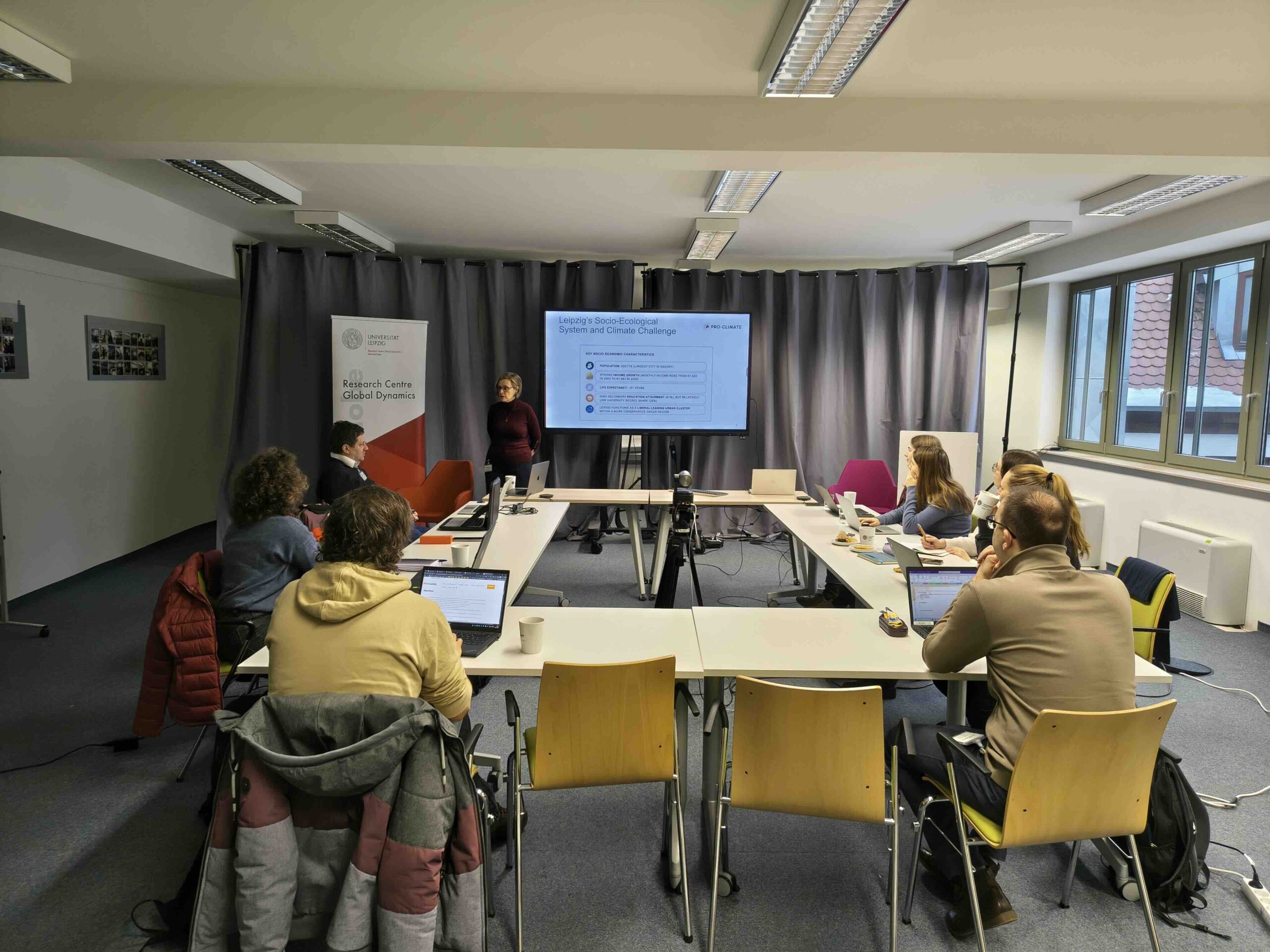
Hosted by Leipzig University, the PRO-CLIMATE team met with city officials to present results from “WP3: Mapping of Climate Adaptation Systems”, led by the Co-opAbility Institute.
Dr. Irini Theodorakopoulou and the Co-opAbility team presented a “Participatory Governance Assessment” for the City of Leipzig. While the city has set ambitious targets (including carbon neutrality by 2030) the assessment identified a critical “implementation gap”. Key findings revealed that while decision-making processes are formally clear, they remain operationally slow, often hindered by administrative capacity and sequential, rather than parallel, departmental reviews. The research also highlighted significant power asymmetries, often exert more influence on outcomes than participatory bodies. Furthermore, while environmental engagement in Leipzig is valued, it remains at 15%, which is below the national average, with groups like renters and low-income households often underrepresented.
Following the presentation, city officials participated in a hands-on exercise titled “Power & Bottlenecks in Our Own System”, designed using Theory U logic. Moving beyond climate policy content, the workshop focused on how the administrative system itself enables or blocks decisions. Using a “4D Mapping” technique, participants mapped their roles based on Formal Authority versus Actual Influence. This “presencing” exercise allowed administrators to surface system’s bottlenecks, and identify “micro-leverage points” where they can realistically shift system dynamics.
The meeting concluded with a commitment to move from “invited participation” to “targeted inclusion”, ensuring that climate justice and operational accountability are at the heart of Leipzig’s governance framework.