Introduction
The Gdańsk Living Lab (LL), developed within the Horizon Europe PRO-CLIMATE project, functions as a collaborative platform for urban innovation, aimed at enhancing the city’s resilience to intensifying flood risks linked to climate change. Focusing on participatory governance, behavioural adaptation, and systemic change, this Pilot Operational Plan (POP) outlines a strategic pathway for improving Gdańsk’s flood management capacity and public engagement in climate adaptation.
Situated on the southern Baltic coast of Poland, Gdańsk has experienced increasingly frequent and severe heavy rainfall events, flash floods, and coastal storms. This vulnerability was exemplified by the severe flooding events of 2001 and 2016—both widely described in local media and public discourse as “floods of the century” due to their scale and impact, which caused widespread damage to infrastructure, housing, and transport. In response, Gdańsk has implemented a series of structural and nature-based interventions, including the development of retention parks and enhanced stormwater infrastructure. However, ongoing challenges such as governance fragmentation, insufficient cross-sector coordination, and low public awareness of flood risks continue to hinder the city’s adaptive capacity.
Supported by the University of Gdańsk and in collaboration with municipal agencies, water utilities, and civil society organisations, the Gdańsk LL builds upon existing initiatives while introducing new participatory and behavioural approaches. The LL aims to improve stakeholder cooperation, increase public understanding of climate risk, and support the development of integrated flood resilience strategies.
Key Contextual Challenges in the Gdansk Living Lab
Environmental pressures
➚ Increasing frequency of torrential rain and urban flash floods (notably in 2001 and 2016).
➚ Limited natural retention areas and extensive surface sealing reduce water absorption and elevate flood risk.
➚ Sea-level rise threatens critical infrastructure along the coastline.
Socio-Economic Dynamics
➚ Rapid urban development outpaces adaptation measures, especially in newly built districts.
➚ Public awareness is growing, but preparedness and proactive behaviours remain inconsistent.
➚ Citizens express both optimism and scepticism regarding flood management responses.
Governance Constraints
➚ Strong municipal leadership in combining engineering and nature-based approaches.
➚ Collaboration with the University of Gdańsk and other partners provides technical capacity, but coordination can be improved.
➚ Key governance gaps persist in engaging citizens, scaling initiatives, and aligning across departments.
Opportunities for Systemic Change
The Gdańsk LL identifies several strategic areas where targeted interventions could accelerate urban flood resilience and support systemic adaptation:
- Integrated Flood Management through Hybrid Infrastructure
Building on the city’s investment in retention parks and green-blue corridors, the LL supports the expansion of multifunctional infrastructure. Combining grey engineering with nature-based solutions can reduce runoff, enhance microclimates, and serve both ecological and recreational functions. - Civic Literacy and Behavioural Preparedness
Engaging schools, residents, and neighbourhood associations through tailored awareness campaigns, educational tools, and flood preparedness programmes can promote behavioural change. Citizen involvement in monitoring and maintaining adaptation measures also strengthens accountability. - Collaborative Governance Models
Gdańsk offers a favourable environment for piloting governance innovation. Initiatives such as participatory budgeting for adaptation projects or the formation of cross-sectoral climate task forces could serve to integrate local knowledge into planning and enhance institutional transparency. - Policy Integration and Knowledge Transfer
Ensuring alignment with national adaptation plans and EU priorities (such as the European Climate Adaptation Strategy and Green Deal objectives) provides a pathway for scaling successful pilots. Capturing and transferring lessons learned across Polish and Baltic coastal cities enhances replicability.
Through this diagnostic lens, the Gdańsk LL positions itself as a strategic actor in enabling participatory, evidence-informed, and behaviourally aware adaptation. By building upon existing city strategies while actively addressing identified gaps, it seeks to foster a resilient, inclusive, and climate-ready urban environment.
Stakeholder Landscape and Roles
The core institutional actors include the City of Gdańsk, particularly the Department of Ecology and Energy, and Gdańsk Water, which oversees stormwater infrastructure. These bodies are responsible for the implementation of both grey and green infrastructure solutions. Additional public authorities such as State Water Holding “Polish Waters” and the Regional Directorate for Environmental Protection are involved in regulatory oversight and environmental planning.
Academic input is provided by the University of Gdańsk, which offers expertise in coastal dynamics, urban hydrology, and climate science. These research contributions support the design of evidence-based adaptation measures and evaluation methods.
Civil society plays a growing role in public engagement and awareness. Local organisations, including Tricity Without Smog and community-based initiatives, contribute to education campaigns and the mobilisation of residents, particularly in districts frequently affected by flash floods. Although participation by vulnerable groups has been limited in the past, recent efforts focus on creating more accessible entry points for dialogue and feedback.
Private stakeholders include real estate developers, infrastructure contractors, and utility service providers. While they are not direct participants in public planning, their actions significantly influence land use and surface permeability, making their engagement essential for sustainable urban drainage strategies.
Relevant news items
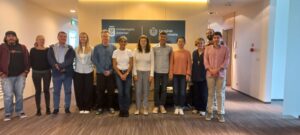
PRO-CLIMATE project meeting in Gdansk
On 17-18 September 2025, PRO-CLIMATE partners gathered in Gdańsk, Poland, for a two-day project meeting hosted by University of Gdansk. The consortium reviewed overall progress,
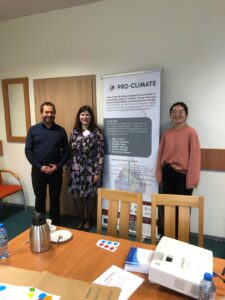
First Steps Toward Establishing the Gdańsk Living Lab
Gdańsk hosted the first physical workshop to establish the foundations of its local Living Lab. The initiative marks an important step in co-developing nature-based and