

PRO-CLIMATE Research Presented at Environ 2026: New Insights into Behavioural Drivers of Climate Adaptation
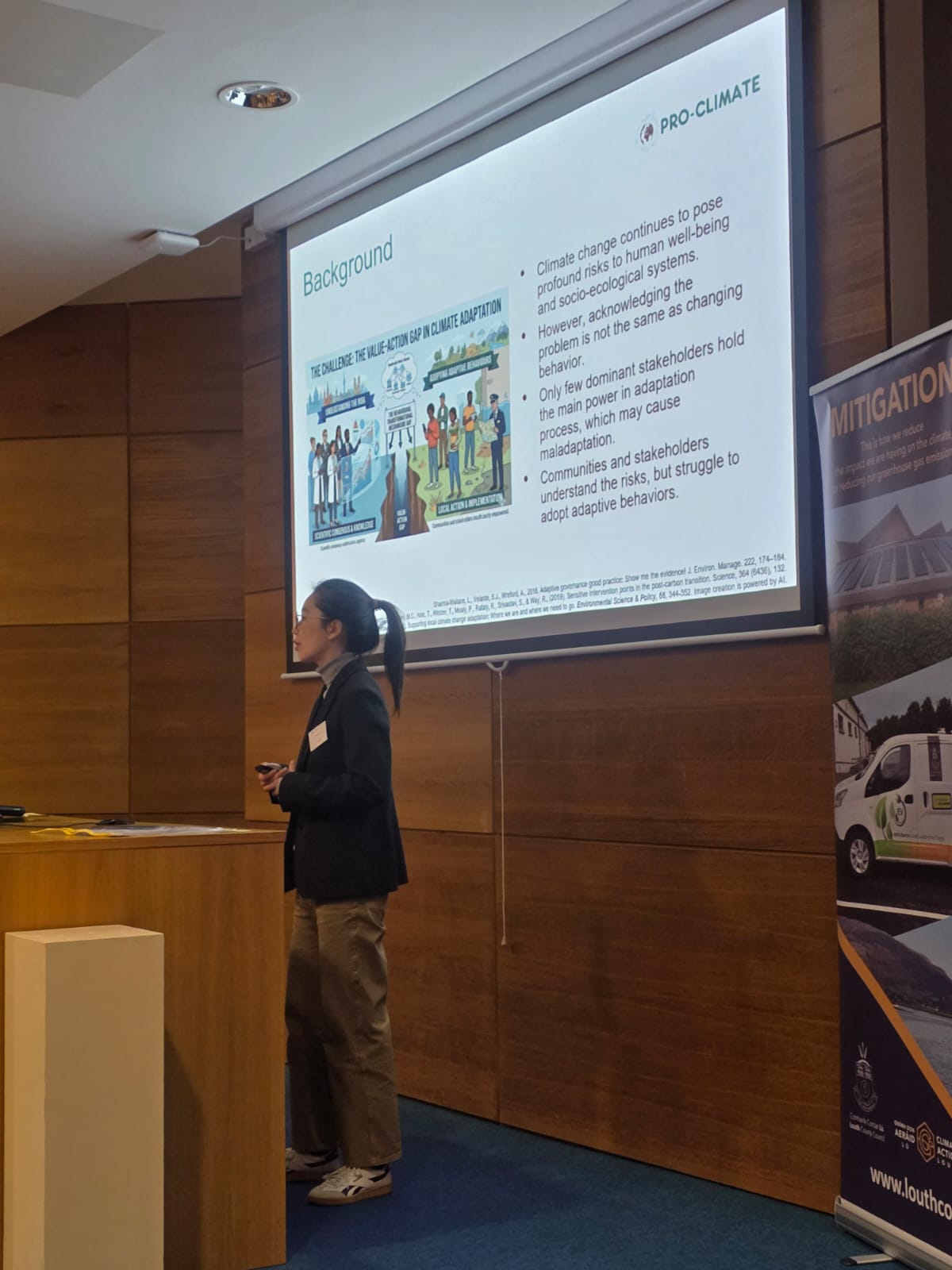
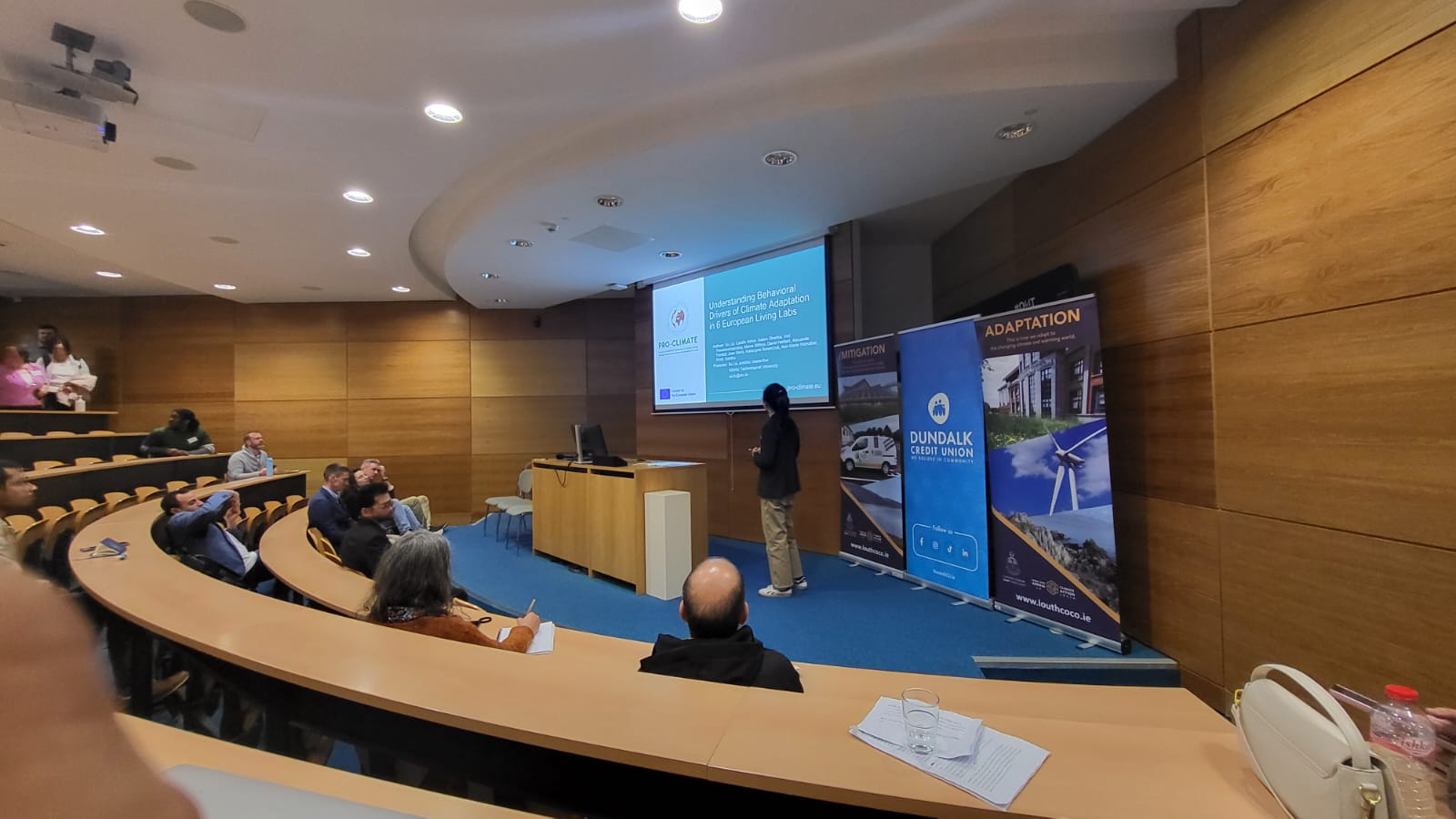
Researchers from the PRO-CLIMATE project presented findings at Environ 2026, shedding light on how living labs can accelerate behavioural change in climate adaptation across European communities.
The study, presented by colleagues from Atlantic Technological University (ATU), examined six living lab sites spanning Sligo, Gdańsk, Badajoz, Zakynthos, Leipzig, and Bergen. Using a mixed-methods approach (combining baseline surveys with participatory workshops) the research set out to identify the factors that most effectively motivate local communities to adopt adaptive climate behaviours.
Key findings point to trust-building, inclusive participation, and the exchange of locally relevant knowledge as critical drivers of behavioural change. The research also highlights institutional support, resource accessibility, and facilitation capacity as enabling conditions that shape how communities engage with climate adaptation processes.
The work builds on the growing recognition of living labs as collaborative, multi-stakeholder environments that support sustainability transitions through co-creation — the so-called quadruple helix model involving academia, industry, government, and civil society. Despite the expanding use of living labs in innovation research, PRO-CLIMATE is among the first to systematically examine how these settings translate into measurable behavioural shifts at the community level.
The findings carry practical implications for the design of participatory climate adaptation initiatives across Europe, offering a framework for strengthening community resilience from the ground up.
PRO-CLIMATE continues to generate evidence-based insights that can inform both policy and practice in the transition toward climate-resilient societies.