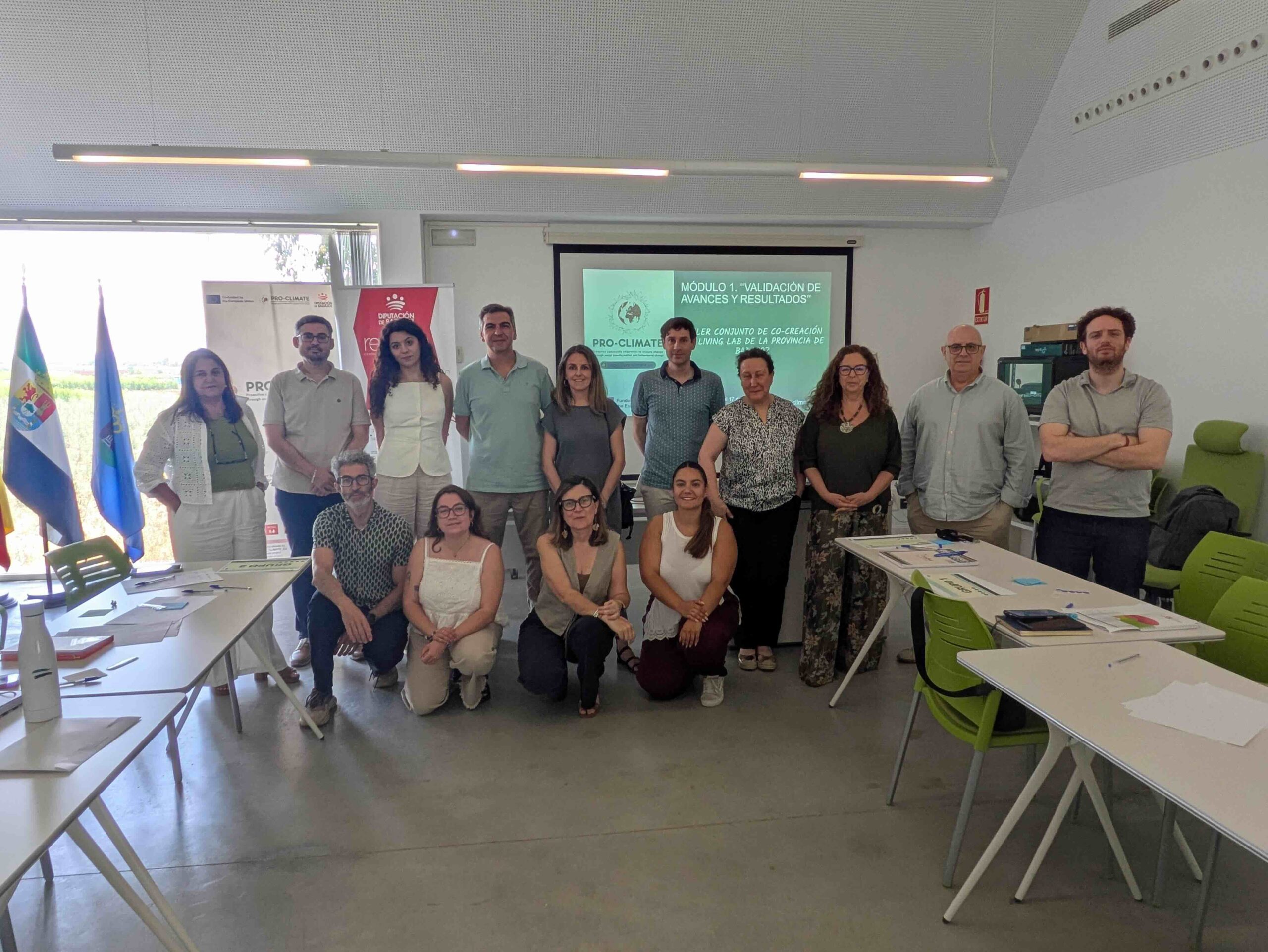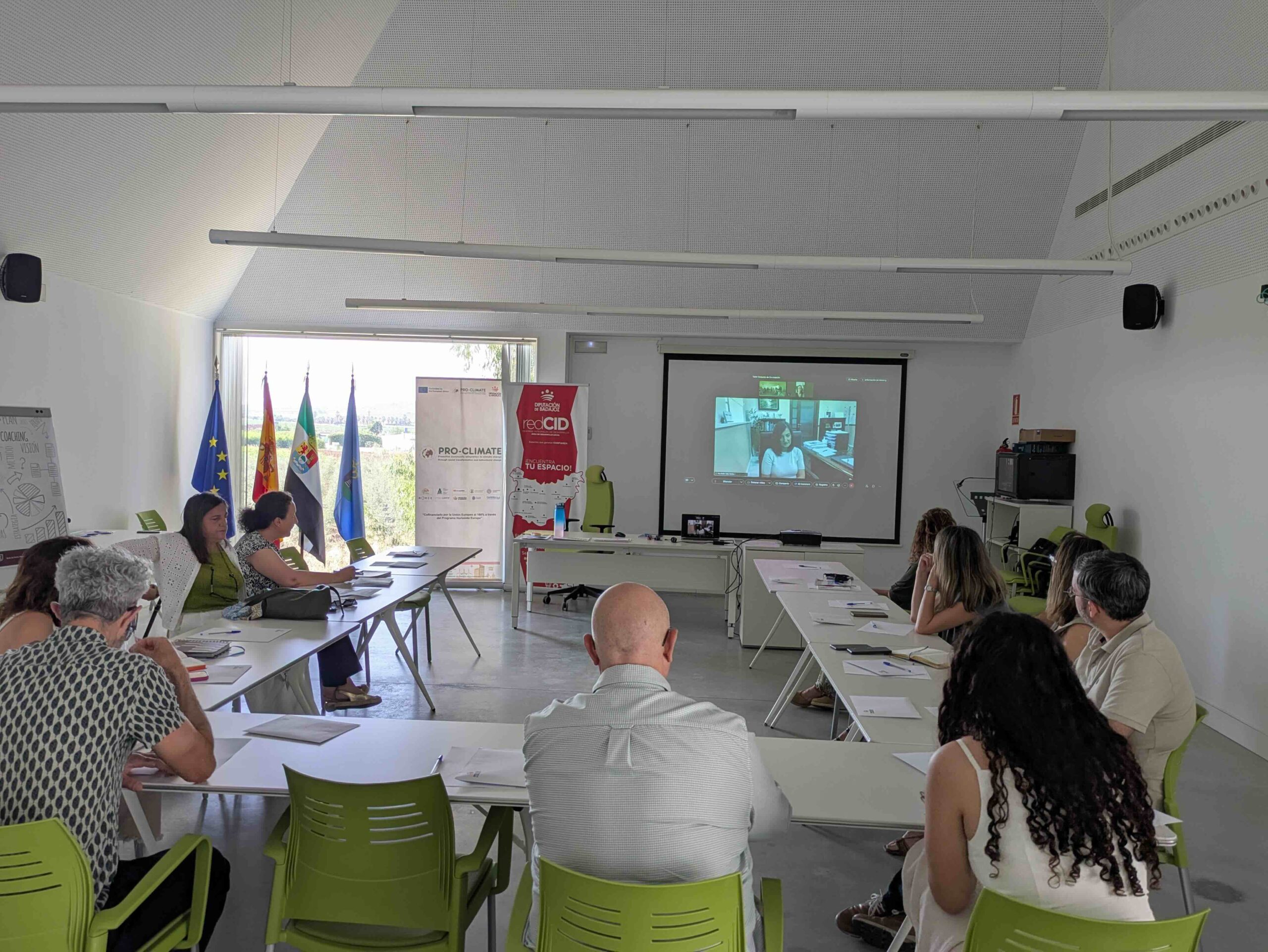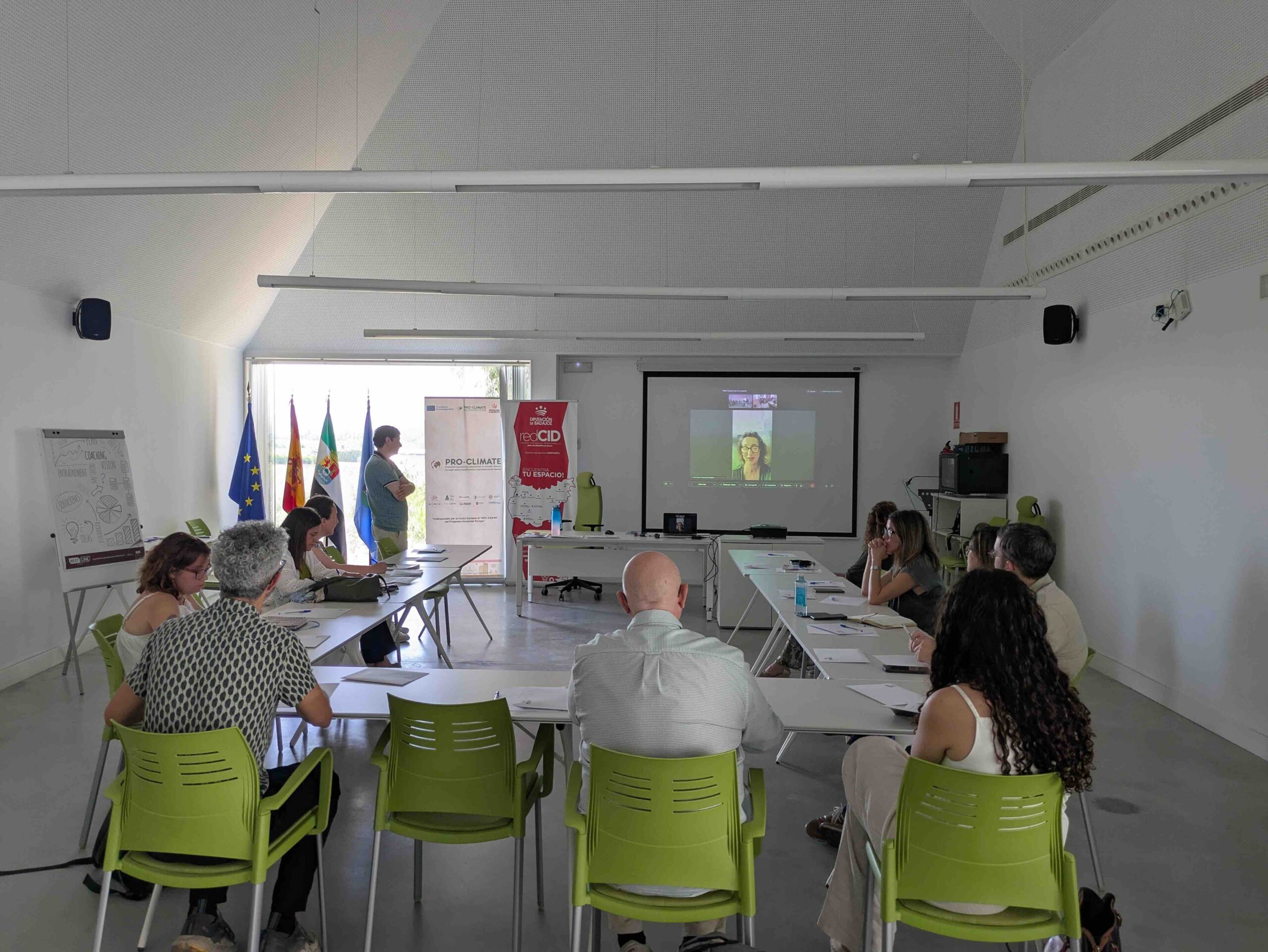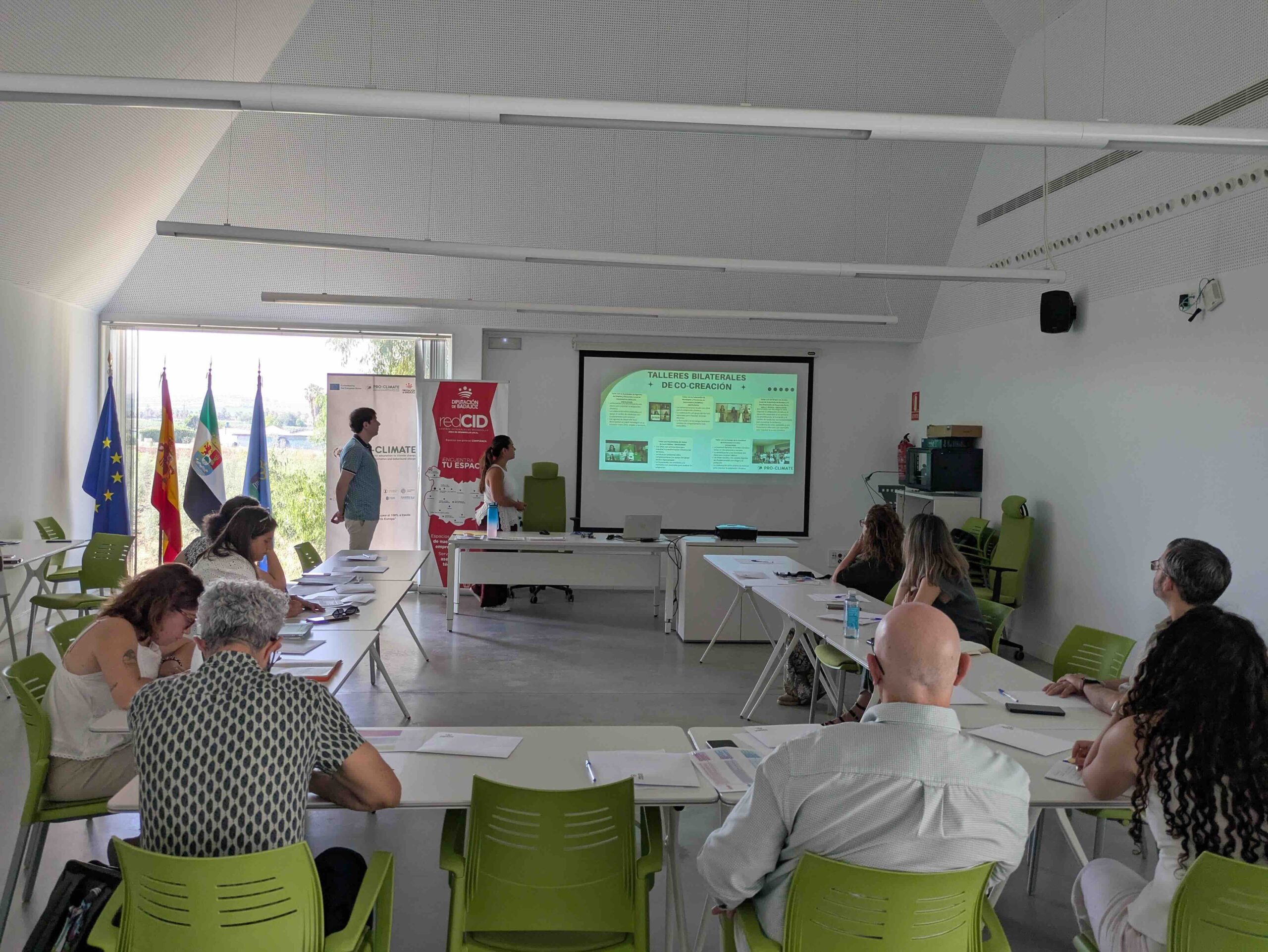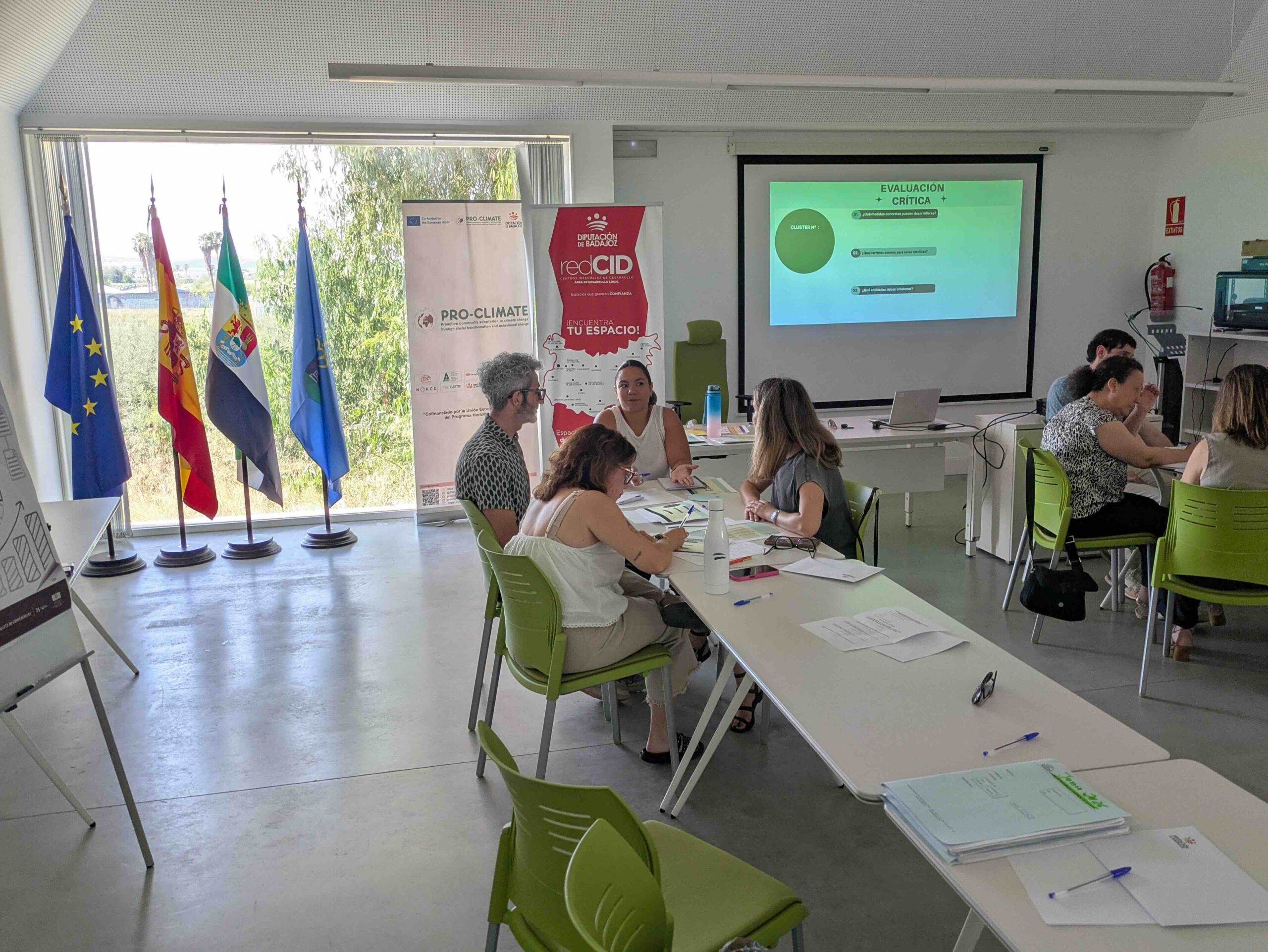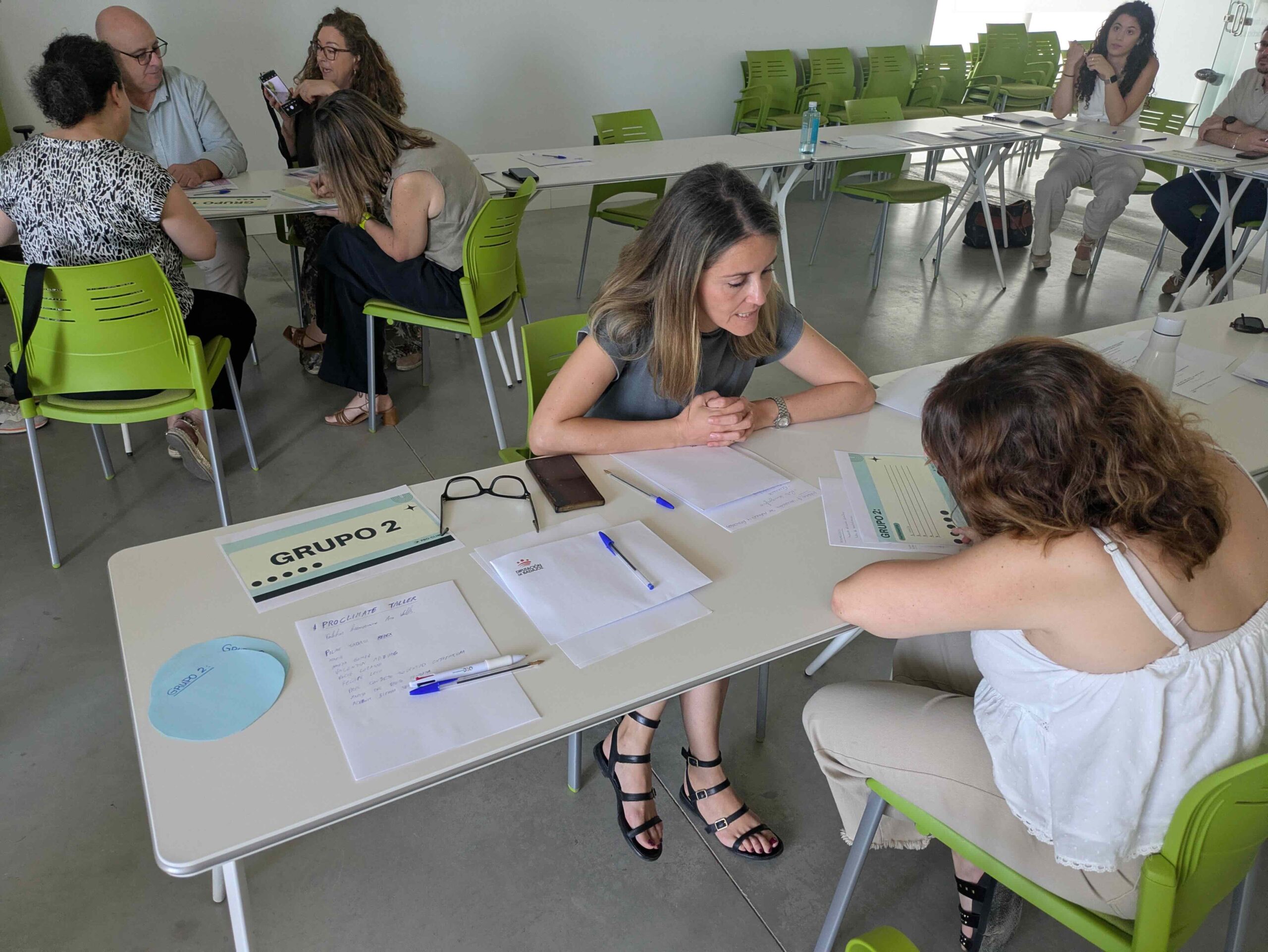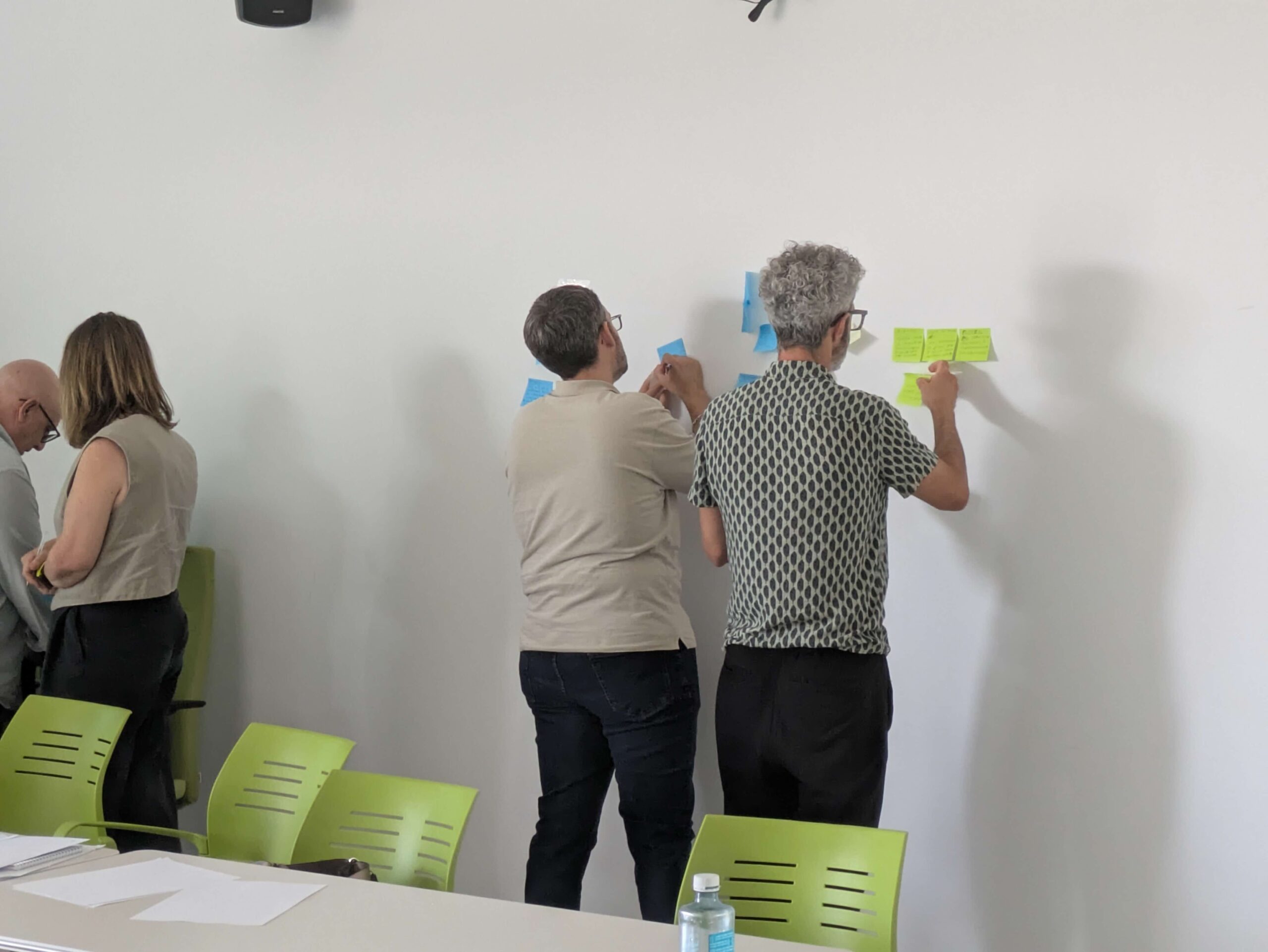
The meeting has made it possible to validate the progress of the Living Lab of the Province of Badajoz, advance in the prioritization of measures, identification of barriers, formulation of policy recommendations and the promotion of behavioral changes.
The Provincial Council of Badajoz, through the Area of Rural Development, Demographic Challenge and Tourism, together with the CARTIF technology centre, held a joint co-creation workshop on 17 June 2026 in Calamonte (Badajoz) within the framework of the European project PRO-CLIMATE. The activity was developed within the work of the Living Lab of the province of Badajoz, especially linked to the work packages WP2 “System analysis and identification of barriers”, WP4 “Good governance and behaviour change” and WP6 “Policy Recommendations”.
The main objectives of the meeting were to prioritise measures to adapt to climate change and the demographic challenge, identify the most viable actions for their implementation, generate alliances between the different actors in the territory and draw up recommendations for the design of public policies.
The day, with a duration of four hours, took place between 10:00 a.m. and 2:00 p.m. at the facilities of the CID Municipio Centro de Calamonte in the province of Badajoz. Representatives of the most relevant sectors of the province of Badajoz participated in it, including public administrations, universities, non-governmental organizations, civil society entities such as REDEX and Local Action Groups.
The deputy of the Area, Ana Belén Valls, was in charge of giving the institutional welcome. highlighting the importance of adaptation and mitigation of the effects of climate change, as well as the fight against rural depopulation in the province of Badajoz. Finally, he reaffirmed the commitment of the Provincial Council of Badajoz to these objectives and valued the role of the different participating agents, whose collaboration is essential to move towards a more resilient and sustainable territory.
To achieve the objectives set, the workshop was structured in an eminently participatory methodology, based on collaborative work dynamics aimed at proposing, evaluating and prioritising specific measures aimed at strengthening territorial resilience to climate change and contributing to the fight against the demographic challenge. Each of these specific measures was classified within general clusters of climate adaptation recommendations that had already been previously identified as fundamental in previous co-creation workshops (awareness and education, territorial adaptation and climate resilience, economic development and innovation, regulations and institutional capacity…) Likewise, it was intended to promote the creation of alliances between the different participating agents to facilitate the future implementation of the measures identified within the Living Lab.
The programme was organised into five modules that encompassed concepts from the PRO-CLIMATE work plan, namely WP2 “System Analysis and Barrier Identification” and WP4 “Good Governance and Behaviour Change”. These modules gave continuity to the bilateral co-creation workshops held previously, advancing in the process of selecting and prioritizing general measures against climate change and demographic challenge.
The first module focused on the validation of progress and results obtained to date. The rest of the modules were based on a participatory dynamic between the various representatives of the agents that are part of the Living Lab. In this way, the second and third modules were dedicated to the critical evaluation and prioritization of measures; the fourth module addressed the possibilities of scaling up and integrating the proposals into public policies; and the fifth module focused on governance and the definition of a roadmap for its implementation, also linking to WP6 “Policy Recommendations”.
Finally, within the framework of WP2 “System analysis and identification of barriers”, the participants completed an evaluation questionnaire aimed at collecting their assessment of the results of the workshop and identifying possible future lines of work in the field of climate adaptation and territorial resilience.
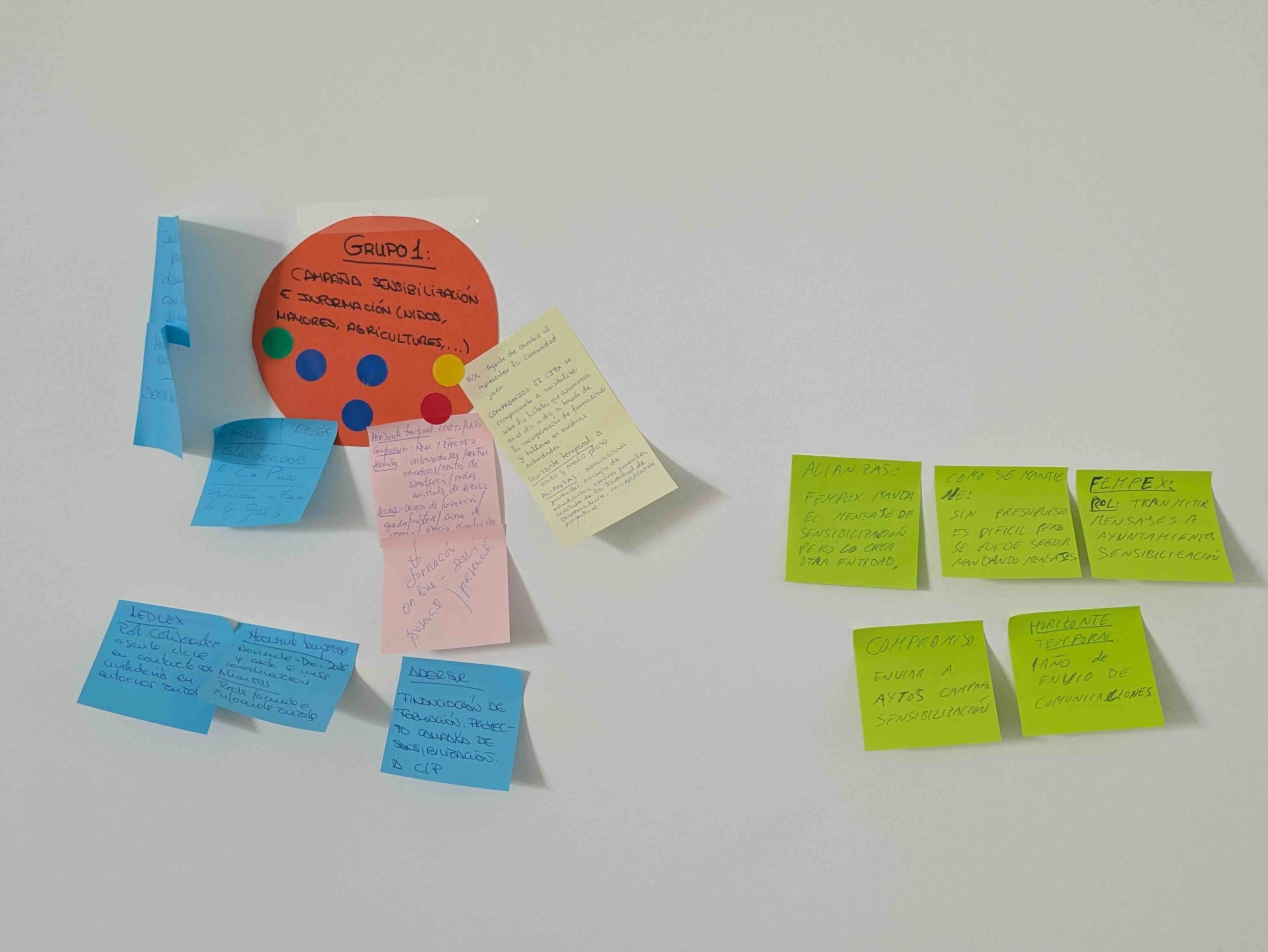
Among the various recommendations and priority lines of action proposed during the conference to promote adaptation to climate change and the fixation of population in rural areas of the province of Badajoz, he highlighted, for example, the development of information and awareness campaigns aimed at specific groups of the population (children, farmers, the elderly) through specialized targeted channels, to promote sustainable adaptation practices that pursue multiple objectives in terms of water use and management. Another of the recommendations identified was the creation of a Multi-Service Demonstration Physical Hub to support technological and digital innovation projects in sectors related to climate change adaptation (climate and climate scenarios, health, water and water resources, forestry or agriculture). Likewise, the participants identified the creation and improvement of climate refuges as a key measure within the cluster of territorial adaptation and climate resilience. Similarly, they underlined the need to strengthen institutional coordination through effective implementation, monitoring and governance mechanisms, in line with the cluster of financing, regulation and institutional capacity building.
Finally, the attendees pointed out that the main barriers to the implementation of these measures are insufficient financial resources, resistance to change and the influence of political factors on decision-making processes.
With this initiative, the Living Lab of the Province of Badajoz has reaffirmed its role as a space for innovation and participation, promoting processes of social transformation that allow us to collectively face the challenges of climate change and the demographic challenge, through the adoption of more sustainable and resilient behaviours for the future of the province.